
Imran Khan not the only one silenced as Pakistan military suppresses dissent
/ By David Wilson
Imran Khan not the only one silenced as Pakistan military suppresses dissent
/ By David Wilson
Imran Khan, the imprisoned former prime minister of Pakistan, has not been allowed any visitors for more than five weeks, according to his party.
His relatives contend the restriction is designed to prevent his words from reaching the outside world, and they accuse the country’s military chief, Field Marshall Asim Munir, of being responsible. The government rejects that allegation, saying visits were halted because Khan breached prison rules that ban political discussion.
Khan may be muted for now, but he is far from the only person under strain.
According to voices from journalist, analysts and human rights advocates, the space for dissent against the state has narrowed and the risks have grown.
Just last weekend, human rights lawyer Imaan Mazari and her husband were found guilty of sharing anti-state posts on social platforms.
They were each sentenced to 10 years in prison.
Before the verdicts were delivered, Amnesty International urged Pakistan to stop “coercive tactics used to silence dissent and intimidate those who defend human rights”.
Khan’s family insists there is a deliberate effort to erase him from the public conversation.
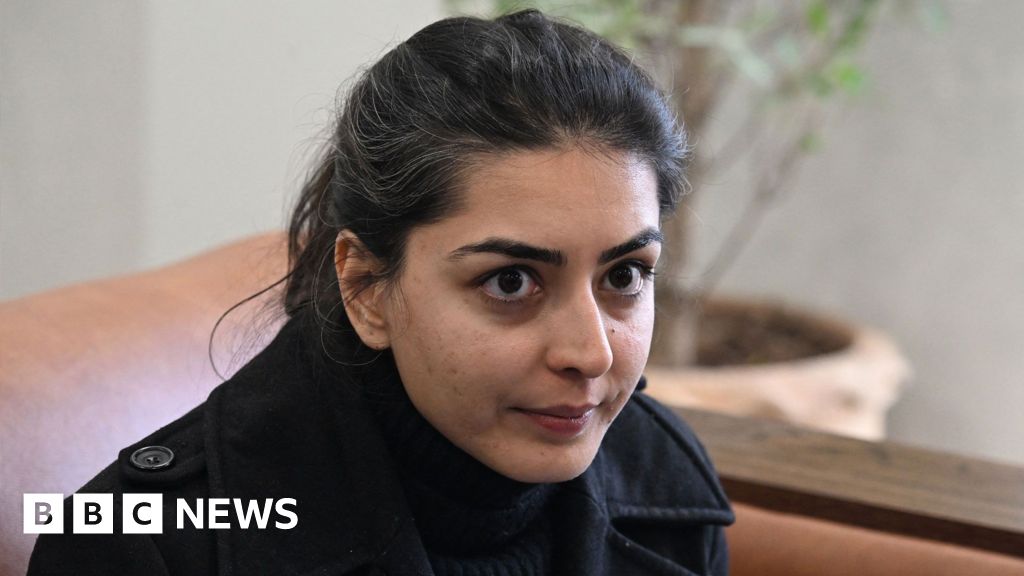
“There are two names you can't have on television. You can't say anything nice about Imran Khan, and you can't say anything bad about Asim Munir,” his sister, Aleema Khanum, told the BBC. She spoke at a recent rally by supporters a few kilometres from his cell at Rawalpindi’s Adiala jail.
His party says he has not seen a family member for more than eight weeks, and his most recent meeting with a lawyer was over five weeks ago—and lasted only eight minutes.
At the protest, Khanum said building public pressure is their only option right now to secure access. She argued that meeting his lawyers and family is his right and his only line of communication with the outside world.
When it has happened, that communication has often been sharply critical of Pakistan’s government and the military chief. After jail meetings, statements attributed to Khan have frequently appeared on his X account, offering direction to his party and supporters.
“They are unable to block his voice because people want to hear him, they read his messages, they are not giving up on him,” Khanum said.
For the moment, however, the halt to visits has also cut off those messages.
Behind bars since August 2023, Khan has been convicted in several corruption cases that he says are politically motivated.
Officials in government and the military reject claims that he is kept in isolation. Interior minister Talal Chaudhry has called him “the most privileged prisoner in Pakistan,” saying he has gym equipment and a cook.
After an X post appeared quoting Khan as calling Munir a “mentally unstable person,” the military spokesperson held a two-hour news conference, broadcast across Pakistan’s media, saying Khan had moved beyond politics and was a national security threat.
Michael Kugelman, a senior fellow for South Asia at the Atlantic Council, says one could argue the military is steering the country on so many levels that Pakistan is edging close to authoritarian rule.
He added that repression is now at its worst point during any period of civilian rule.
The military—often dubbed “the establishment”—has long been a constant force in Pakistan’s politics, including during eras of military dictatorship.
Early in Khan’s tenure, he and the military appeared aligned; many believe its backing helped bring him to office, and at the time the opposition accused him of governing in thrall to the military. His party denied that.
By the time he was removed in a no-confidence vote in 2022, Khan had fallen out with the military leadership and blamed them for bringing down his government.
In November 2025, a constitutional amendment granted Munir lifetime immunity from prosecution and oversight of all Pakistan’s defence forces.
Many viewed that as further evidence that the military’s influence under a civilian administration had reached a high-water mark.
The current government denies that the military is calling the shots.
“The civilian government is [taking] decisions. We are all working hand in glove,” Chaudhry says, adding that the chief of defence forces “is doing a marvellous job”.
Security sources said: “The military has always maintained it operates within legal bounds.”
Even so, Kugelman and others see a link between the military’s reach into politics and the amount of space for expression.
Munizae Jahangir, a journalist and co-chair of the Human Rights Council of Pakistan (HRCP), says it is intrinsically connected to the strength or weakness of a democratic government and to its relationship with the military.
“If the military is more dominant, there will be less space for protest, there will be less space for dissent, there will be less space for free expression,” she said.
Among those already behind bars, Mazari is one of the most prominent. A lawyer known for taking on some of Pakistan’s most sensitive cases, she and her husband, Hadi Ali Chattha, were convicted of “disseminating and propagating narratives that align with hostile terrorist groups.”
Officials have defended the sentences; Pakistan’s information minister posted on X: “As you sow, so you shall reap!”
“Attempts to frame law-breaking as democracy or human rights are entirely misplaced,” Chaudhry said.
Other human rights advocates told the BBC they, too, have run up against restrictions in their work.
HRCP says staff have been harassed over the phone and blocked from holding round-table discussions at hotels unless they secure prior permission. The government says these steps are “to ensure security”.
Those in the journalist community also describe pressure. In 2023, the BBC reported that TV channels were told not to show Khan’s face or voice, or even say his name. According to journalist the BBC spoke to, the subjects deemed off-limits have grown.
“They [Pakistan’s authorities] have controlled the mainstream media to a large extent,” said Geo TV reporter Azaz Syed. He added that even stories only loosely tied to the military—including one he recently did on a defence housing authority—have prompted calls from unknown numbers warning him not to proceed.
Jahangir says editors have directly instructed her not to cover particular stories.
“The editors are not doing this for fun. They do fundamentally believe in freedom of expression. They are doing this in order to survive,” she said.
journalists from other outlets, who spoke to the BBC on condition of anonymity, said a culture of self-censorship has become common in newsrooms.
“There were times in the past when there was complete censorship,” one said. “Now there is self-censorship, which in many ways is worse because we are deceiving the audience.”
The BBC sought comment from the military.
Security sources told the BBC that ISPR, the military’s communications arm, “does not regulate media content, freedom of speech, or interfere in civilian journalism, nor does it exercise any authority over public discourse beyond its lawful communication role”.
Dawn newspaper—the country’s oldest, founded in 1941 by Pakistan’s founding father, Muhammad Ali Jinnah—has suffered financially for its reporting. In December, Dawn Media Group said it faced an unannounced ban on government adverts: first on its newspaper, then on its TV and radio outlets. The Council of Newspaper Editors said the move was “financially crippling the organisation”.
“While some within the state may think that punishing outlets that refuse to toe the line may snuff out critical voices, in the modern age this is next to impossible,” the editorial board said.
Information minister Atta Tarar denied that Dawn was denied government advertisement.
Several journalists said changes to Pakistan’s Prevention of Electronic Crimes Act in early 2025 have made the environment more difficult.
Authorities introduced the amendments saying they were needed to counter what the military has often called “digital terrorism”: the spread of what they see as “anarchy and false information” to undermine the state. The country’s constitution protects freedom of speech and expression, subject to reasonable restrictions, security sources told the BBC.
“It’s false to claim Pakistan suppresses free speech,” Chaudhry says. He cited the dangers of social media being used for financial fraud and for recruiting terrorists. “We want to regulate social media, the whole world is regulating [it].”
Critics counter that these tools can limit a journalist’s ability to report.
“Changes made to the law have now made it an explicit crime to criticise the security establishment, the judiciary and definitions around national interest have been made even more vague. There are astonishingly steep fines and the penalties have been enhanced disproportionately,” said Adnan Rehmat, a media analyst in Islamabad.
He added that beyond the official rules, unspoken lines also exist: “It’s really difficult to know what the boundaries are, they are forever shifting.”
Limits on the press are not new in Pakistan. Under Khan’s government, journalist protested against restrictions on what they could publish and broadcast.
Syed sees the current situation as a continuation of pressure against the media. Jahangir also sees a degree of historical consistency. “I can’t say this has been the worst time, but let’s say that times haven’t improved for us,” she said.
Although efforts to constrain and intimidate critics are not new, some say the approach now looks different.
“It feels like something has shifted,” said Azeema Cheema, an Islamabad-based research director who specialises in conflict, fragility and violence. “Because now you are using the courts. You are using institutions, not extra institutional measures.”
Those working online from outside Pakistan are also in the authorities’ sights. In early January, seven Pakistani journalists and Youtubers, including two former army officers, were tried in absentia and handed life sentences for digital terrorism. Prosecutors accused them of “waging war against state” and “incitement” in connection with protests on 9 May 2023 after Khan’s first arrest.
In a post on X, one of those sentenced, Adil Raja, said “speaking truth to power is now called Digital Terrorism in Pakistan”.
Syed and Cheema cite that case as a particularly stark example of severe punishment.
“There’s been a growing realisation that the state is excessively willing and unapologetically willing to wield a blunt hammer,” Cheema said.
Where that hammer might fall next is what many of those we interviewed are trying to assess.
Additional reporting by Usman Zahid
His relatives contend the restriction is designed to prevent his words from reaching the outside world, and they accuse the country’s military chief, Field Marshall Asim Munir, of being responsible. The government rejects that allegation, saying visits were halted because Khan breached prison rules that ban political discussion.
Khan may be muted for now, but he is far from the only person under strain.
According to voices from journalist, analysts and human rights advocates, the space for dissent against the state has narrowed and the risks have grown.
Just last weekend, human rights lawyer Imaan Mazari and her husband were found guilty of sharing anti-state posts on social platforms.
They were each sentenced to 10 years in prison.
Before the verdicts were delivered, Amnesty International urged Pakistan to stop “coercive tactics used to silence dissent and intimidate those who defend human rights”.
Khan’s family insists there is a deliberate effort to erase him from the public conversation.
“There are two names you can't have on television. You can't say anything nice about Imran Khan, and you can't say anything bad about Asim Munir,” his sister, Aleema Khanum, told the BBC. She spoke at a recent rally by supporters a few kilometres from his cell at Rawalpindi’s Adiala jail.
His party says he has not seen a family member for more than eight weeks, and his most recent meeting with a lawyer was over five weeks ago—and lasted only eight minutes.
At the protest, Khanum said building public pressure is their only option right now to secure access. She argued that meeting his lawyers and family is his right and his only line of communication with the outside world.
When it has happened, that communication has often been sharply critical of Pakistan’s government and the military chief. After jail meetings, statements attributed to Khan have frequently appeared on his X account, offering direction to his party and supporters.
“They are unable to block his voice because people want to hear him, they read his messages, they are not giving up on him,” Khanum said.
For the moment, however, the halt to visits has also cut off those messages.
Behind bars since August 2023, Khan has been convicted in several corruption cases that he says are politically motivated.
Officials in government and the military reject claims that he is kept in isolation. Interior minister Talal Chaudhry has called him “the most privileged prisoner in Pakistan,” saying he has gym equipment and a cook.
After an X post appeared quoting Khan as calling Munir a “mentally unstable person,” the military spokesperson held a two-hour news conference, broadcast across Pakistan’s media, saying Khan had moved beyond politics and was a national security threat.
Michael Kugelman, a senior fellow for South Asia at the Atlantic Council, says one could argue the military is steering the country on so many levels that Pakistan is edging close to authoritarian rule.
He added that repression is now at its worst point during any period of civilian rule.
The military—often dubbed “the establishment”—has long been a constant force in Pakistan’s politics, including during eras of military dictatorship.
Early in Khan’s tenure, he and the military appeared aligned; many believe its backing helped bring him to office, and at the time the opposition accused him of governing in thrall to the military. His party denied that.
By the time he was removed in a no-confidence vote in 2022, Khan had fallen out with the military leadership and blamed them for bringing down his government.
In November 2025, a constitutional amendment granted Munir lifetime immunity from prosecution and oversight of all Pakistan’s defence forces.
Many viewed that as further evidence that the military’s influence under a civilian administration had reached a high-water mark.
The current government denies that the military is calling the shots.
“The civilian government is [taking] decisions. We are all working hand in glove,” Chaudhry says, adding that the chief of defence forces “is doing a marvellous job”.
Security sources said: “The military has always maintained it operates within legal bounds.”
Even so, Kugelman and others see a link between the military’s reach into politics and the amount of space for expression.
Munizae Jahangir, a journalist and co-chair of the Human Rights Council of Pakistan (HRCP), says it is intrinsically connected to the strength or weakness of a democratic government and to its relationship with the military.
“If the military is more dominant, there will be less space for protest, there will be less space for dissent, there will be less space for free expression,” she said.
Among those already behind bars, Mazari is one of the most prominent. A lawyer known for taking on some of Pakistan’s most sensitive cases, she and her husband, Hadi Ali Chattha, were convicted of “disseminating and propagating narratives that align with hostile terrorist groups.”
Officials have defended the sentences; Pakistan’s information minister posted on X: “As you sow, so you shall reap!”
“Attempts to frame law-breaking as democracy or human rights are entirely misplaced,” Chaudhry said.
Other human rights advocates told the BBC they, too, have run up against restrictions in their work.
HRCP says staff have been harassed over the phone and blocked from holding round-table discussions at hotels unless they secure prior permission. The government says these steps are “to ensure security”.
Those in the journalist community also describe pressure. In 2023, the BBC reported that TV channels were told not to show Khan’s face or voice, or even say his name. According to journalist the BBC spoke to, the subjects deemed off-limits have grown.
“They [Pakistan’s authorities] have controlled the mainstream media to a large extent,” said Geo TV reporter Azaz Syed. He added that even stories only loosely tied to the military—including one he recently did on a defence housing authority—have prompted calls from unknown numbers warning him not to proceed.
Jahangir says editors have directly instructed her not to cover particular stories.
“The editors are not doing this for fun. They do fundamentally believe in freedom of expression. They are doing this in order to survive,” she said.
journalists from other outlets, who spoke to the BBC on condition of anonymity, said a culture of self-censorship has become common in newsrooms.
“There were times in the past when there was complete censorship,” one said. “Now there is self-censorship, which in many ways is worse because we are deceiving the audience.”
The BBC sought comment from the military.
Security sources told the BBC that ISPR, the military’s communications arm, “does not regulate media content, freedom of speech, or interfere in civilian journalism, nor does it exercise any authority over public discourse beyond its lawful communication role”.
Dawn newspaper—the country’s oldest, founded in 1941 by Pakistan’s founding father, Muhammad Ali Jinnah—has suffered financially for its reporting. In December, Dawn Media Group said it faced an unannounced ban on government adverts: first on its newspaper, then on its TV and radio outlets. The Council of Newspaper Editors said the move was “financially crippling the organisation”.
“While some within the state may think that punishing outlets that refuse to toe the line may snuff out critical voices, in the modern age this is next to impossible,” the editorial board said.
Information minister Atta Tarar denied that Dawn was denied government advertisement.
Several journalists said changes to Pakistan’s Prevention of Electronic Crimes Act in early 2025 have made the environment more difficult.
Authorities introduced the amendments saying they were needed to counter what the military has often called “digital terrorism”: the spread of what they see as “anarchy and false information” to undermine the state. The country’s constitution protects freedom of speech and expression, subject to reasonable restrictions, security sources told the BBC.
“It’s false to claim Pakistan suppresses free speech,” Chaudhry says. He cited the dangers of social media being used for financial fraud and for recruiting terrorists. “We want to regulate social media, the whole world is regulating [it].”
Critics counter that these tools can limit a journalist’s ability to report.
“Changes made to the law have now made it an explicit crime to criticise the security establishment, the judiciary and definitions around national interest have been made even more vague. There are astonishingly steep fines and the penalties have been enhanced disproportionately,” said Adnan Rehmat, a media analyst in Islamabad.
He added that beyond the official rules, unspoken lines also exist: “It’s really difficult to know what the boundaries are, they are forever shifting.”
Limits on the press are not new in Pakistan. Under Khan’s government, journalist protested against restrictions on what they could publish and broadcast.
Syed sees the current situation as a continuation of pressure against the media. Jahangir also sees a degree of historical consistency. “I can’t say this has been the worst time, but let’s say that times haven’t improved for us,” she said.
Although efforts to constrain and intimidate critics are not new, some say the approach now looks different.
“It feels like something has shifted,” said Azeema Cheema, an Islamabad-based research director who specialises in conflict, fragility and violence. “Because now you are using the courts. You are using institutions, not extra institutional measures.”
Those working online from outside Pakistan are also in the authorities’ sights. In early January, seven Pakistani journalists and Youtubers, including two former army officers, were tried in absentia and handed life sentences for digital terrorism. Prosecutors accused them of “waging war against state” and “incitement” in connection with protests on 9 May 2023 after Khan’s first arrest.
In a post on X, one of those sentenced, Adil Raja, said “speaking truth to power is now called Digital Terrorism in Pakistan”.
Syed and Cheema cite that case as a particularly stark example of severe punishment.
“There’s been a growing realisation that the state is excessively willing and unapologetically willing to wield a blunt hammer,” Cheema said.
Where that hammer might fall next is what many of those we interviewed are trying to assess.
Additional reporting by Usman Zahid